INDOOR
Six a side on 18 × 9 m
The FIVB rules set the court at 18 × 9 m with six players per team in play. A set goes to 25 points with a two-point lead.
Compare the formatsWHAT THE RULEBOOK SAYS
Volleyball is a game of small numbers.
Six players, three hits, sets to 25 and a net taller than most people. The official rules spell out every measurement, and the beach and sitting versions change them in telling ways.
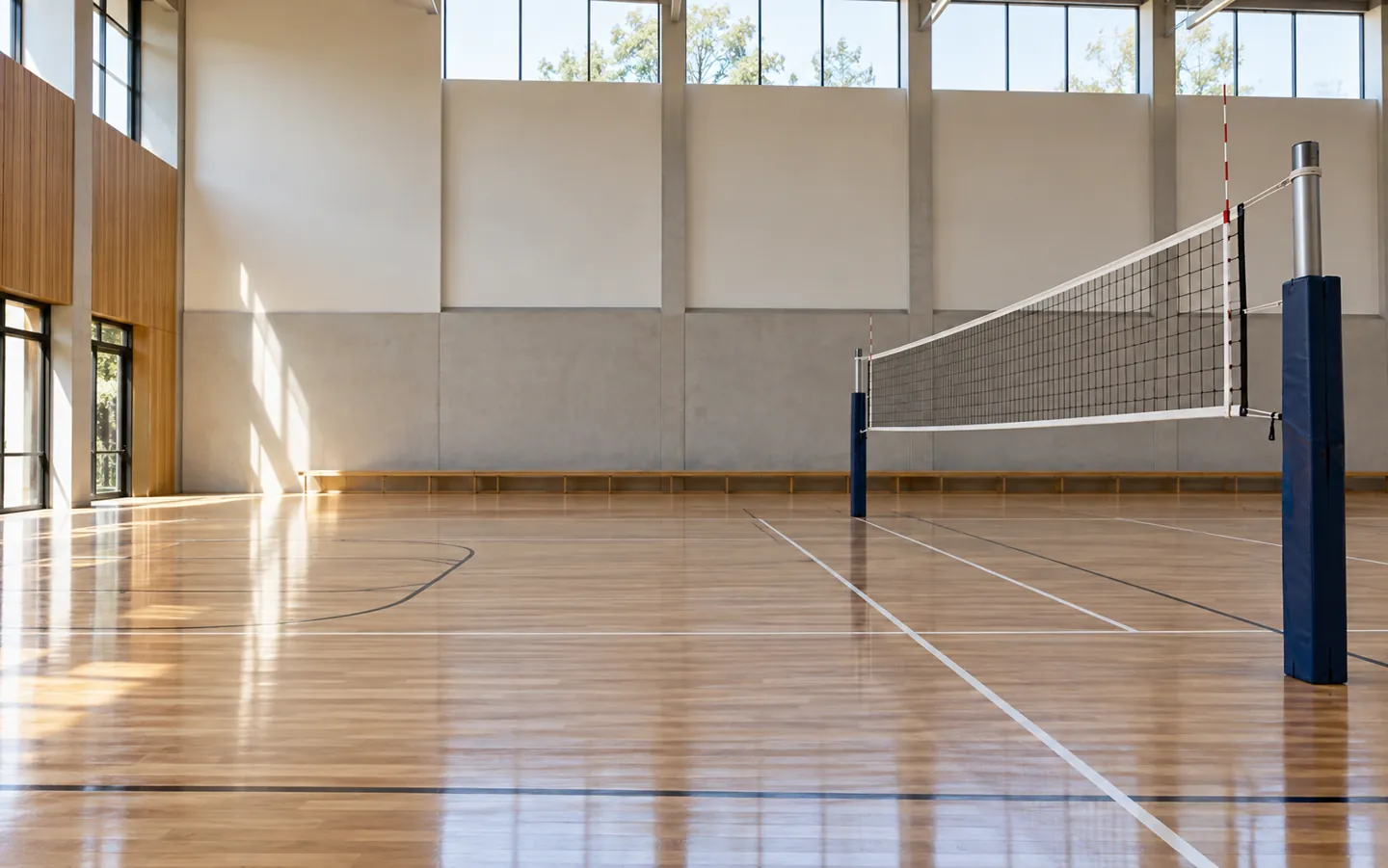
2.43 m men's net, indoor and beach
THE SHORT ANSWER
Indoor and beach use the same net heights.
The court, the team and the scoring change.
INDOOR
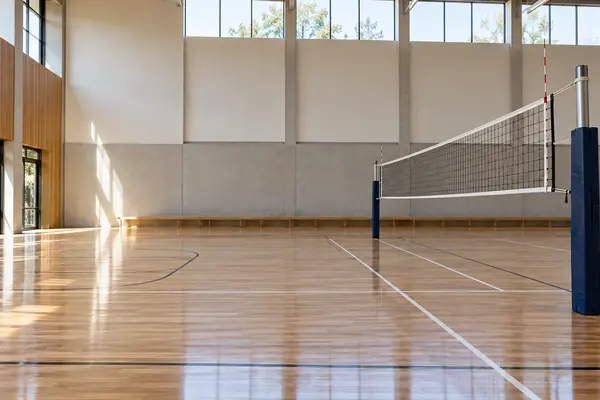
The FIVB rules set the court at 18 × 9 m with six players per team in play. A set goes to 25 points with a two-point lead.
Compare the formatsTHE BALL
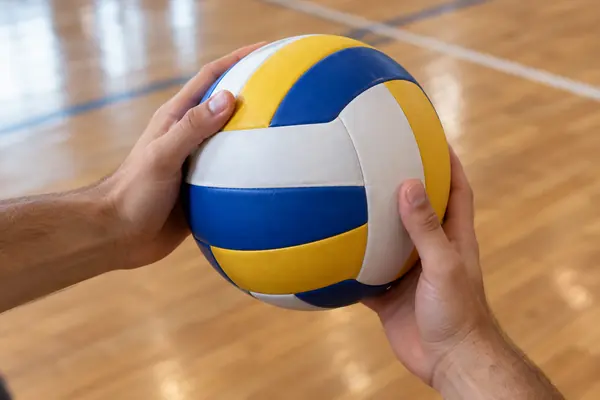
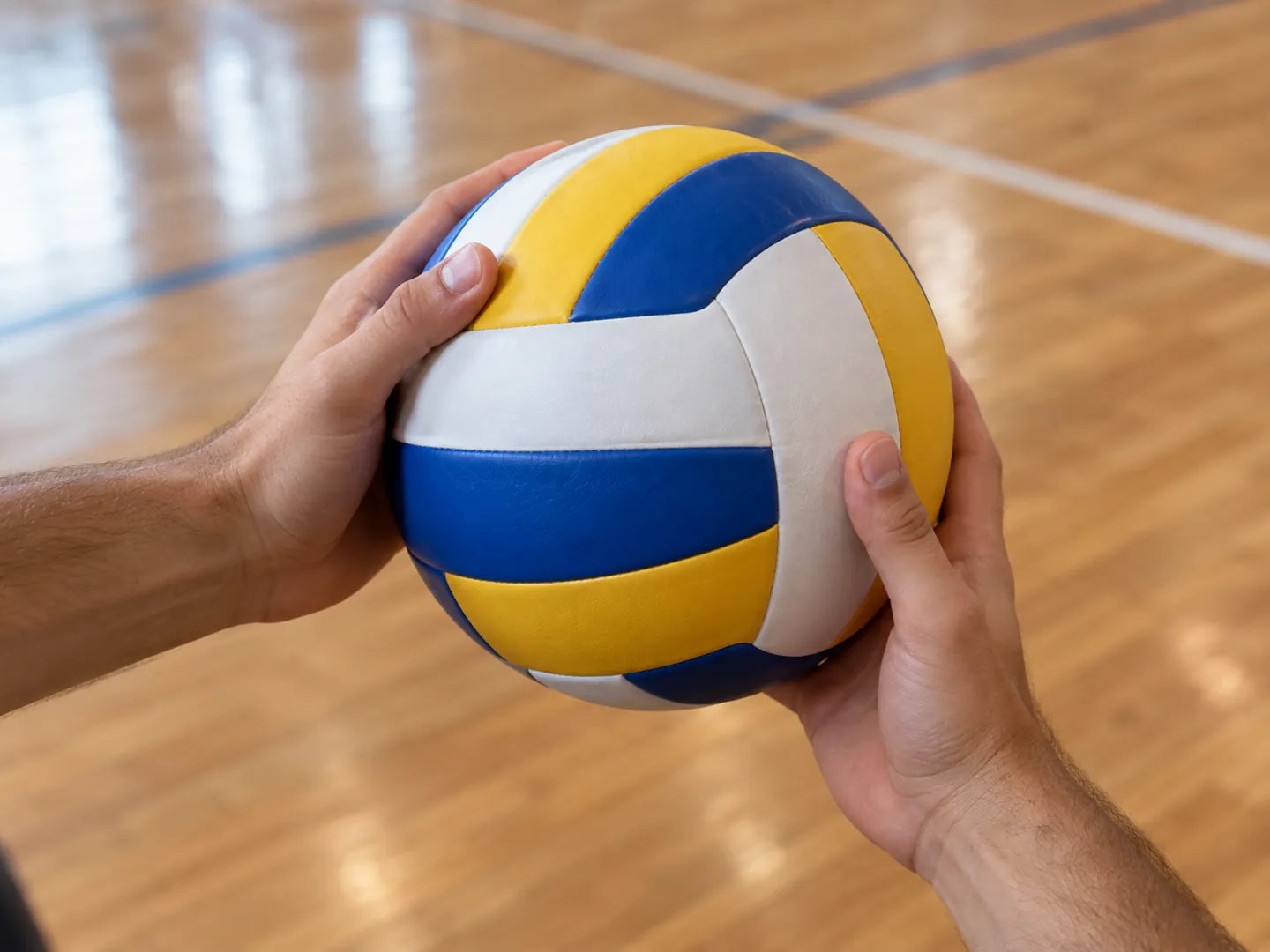
An indoor ball measures 65–67 cm around and weighs 260–280 g. The beach ball is a touch larger at 66–68 cm and is pumped softer.
See the numbersBEACH
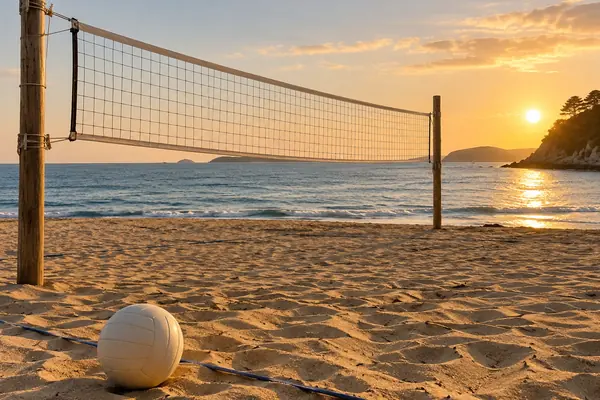
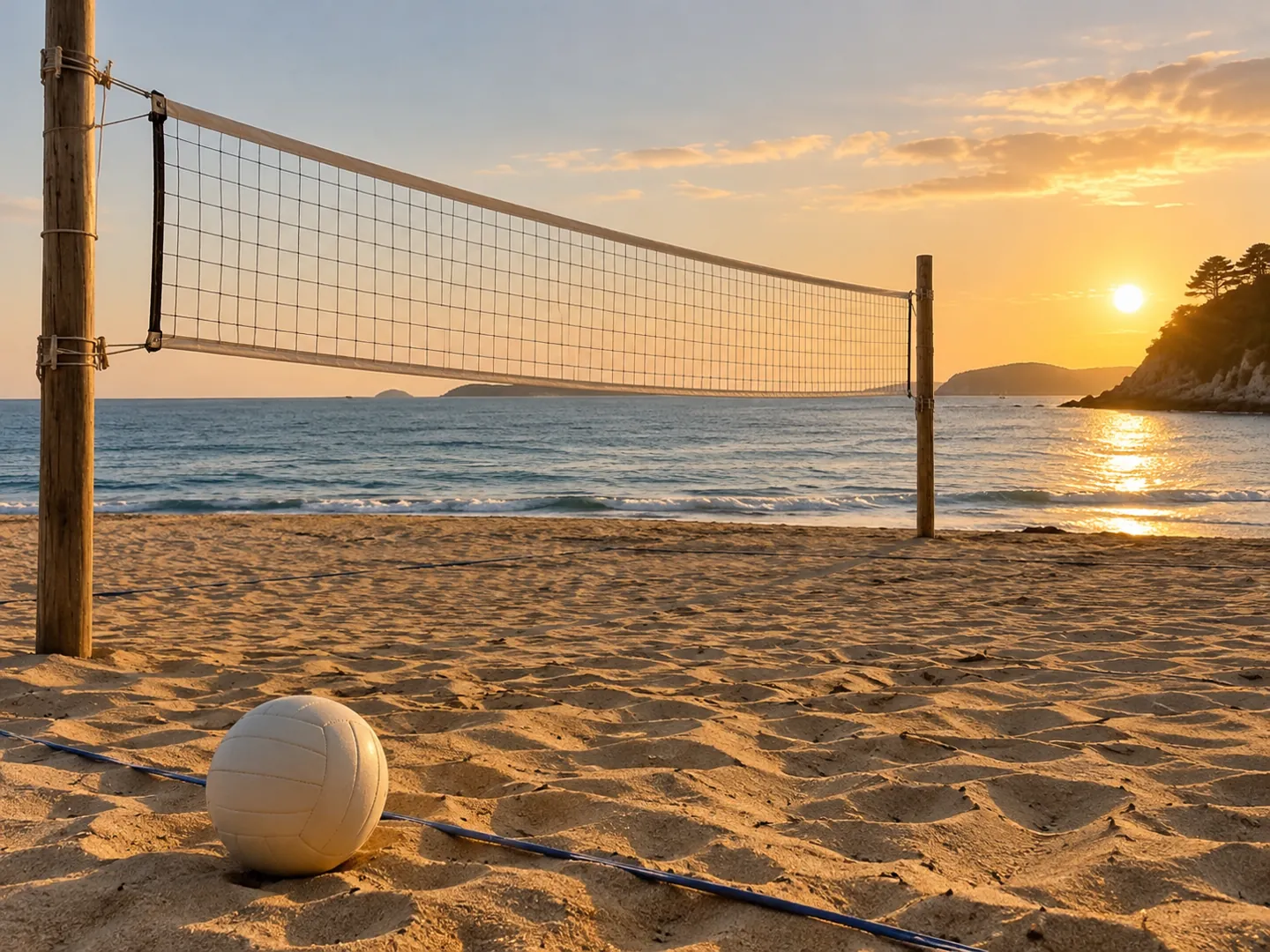
Beach teams are exactly two players on a 16 × 8 m court. Sets go to 21, and the match is won by the first team to two sets.
How a rally worksA QUICK NET CHECK
Pick a format to see the official net height and court size. The bar shows how high the top of the net sits.
Taken from the FIVB Official Volleyball Rules and Beach Volleyball Rules 2025-2028, and Paralympics Australia for sitting volleyball.
TWO NUMBERS WORTH KNOWING
One figure on the playing area,
one on the ball everyone is chasing.
18 × 9 m
Indoor playing court
The indoor court is a rectangle of 18 × 9 m, surrounded by a free zone at least 3 m wide on all sides. At top FIVB events that grows to 5 m from the side lines and 6.5 m from the end lines.
THE COURT · FIVB RULE 1.1
260–280 g
Weight of an indoor ball
The ball must weigh 260 to 280 g, measure 65 to 67 cm around and hold an inside pressure of 0.30 to 0.325 kg/cm². Beach balls weigh the same but run at 0.175 to 0.225 kg/cm².
THE BALL · FIVB RULE 3.1
The net itself is 1 m wide and 9.50 to 10 m long, with a flexible antenna 1.80 m long above each side line to mark the crossing space (FIVB rules 2.2 and 2.4).
FOUR RULES IN A RALLY
Most of the game follows from a handful of rules. These are the ones that shape every rally in the indoor game.
The server must hit the ball within 8 seconds of the first referee's whistle. On the beach the limit is 5 seconds.
A team may touch the ball up to three times to return it, not counting a block. A fourth touch is a fault.
When the receiving team wins the right to serve, its players rotate one position clockwise.
Indoor sets go to 25 with a two-point lead. If it reaches two sets each, the fifth set goes to 15, still by two.
WHERE IT CAME FROM
Volleyball began in 1895 at the YMCA in Holyoke, Massachusetts, under the name mintonette. Its inventor wanted something less physically intense than basketball, so a wider range of ages and abilities could play.
The original net stood about 1.98 m high. A 1920 rule limited teams to three hits, indoor volleyball joined the Olympic Games at Tokyo 1964, and beach volleyball followed in 1996.
Questions
Under the FIVB rules the top of the net is set at 2.43 m for men and 2.24 m for women, both indoors and on the beach. Sitting volleyball nets are 1.15 m for men and 1.05 m for women.
An indoor court is 18 × 9 m with a free zone of at least 3 m around it. A beach court is 16 × 8 m, and a sitting volleyball court is 10 × 6 m.
Indoors there must always be six players per team in play, and a team may list up to 12 players, or up to 14 in FIVB senior competitions. A beach team is exactly two players.
An indoor set is won by the first team to 25 points with at least a two-point lead, and the match by the first to three sets. A deciding fifth set goes to 15. Beach sets go to 21, with a third set to 15.
A libero is a specialist defensive player. The FIVB rules let each team designate up to two of them from the players on the score sheet.
Sources
ABOUT THIS NAME
doodlevolleyball.com is part of the DoodleSale portfolio. It isn't in an auction right now, but you can ask about leasing it.